
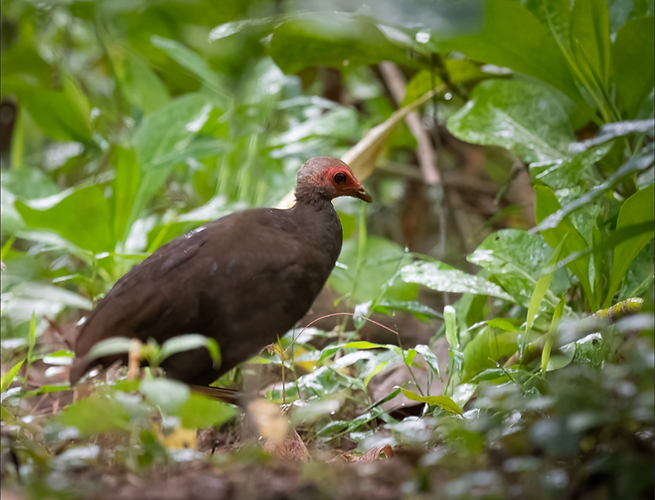
Great Nicobar Endemics Birding Tour
Great Nicobar Island & Andaman Island Endemics
Great Nicobar Island Endemics
Duration: 15 Days/14 nights
Birding peaks during Sept-Oct
Number of expected bird species: 80-100
Walking Difficulty:
Most of the birding is done by the roadside with minimal walking, with some trails for a few species
Accommodation:
Comfortable basic guest houses with twin-sharing rooms, with all basic private facilities
Options for extension/additions:
-
Can be combined with South India & Andaman Endemics Birding Tour
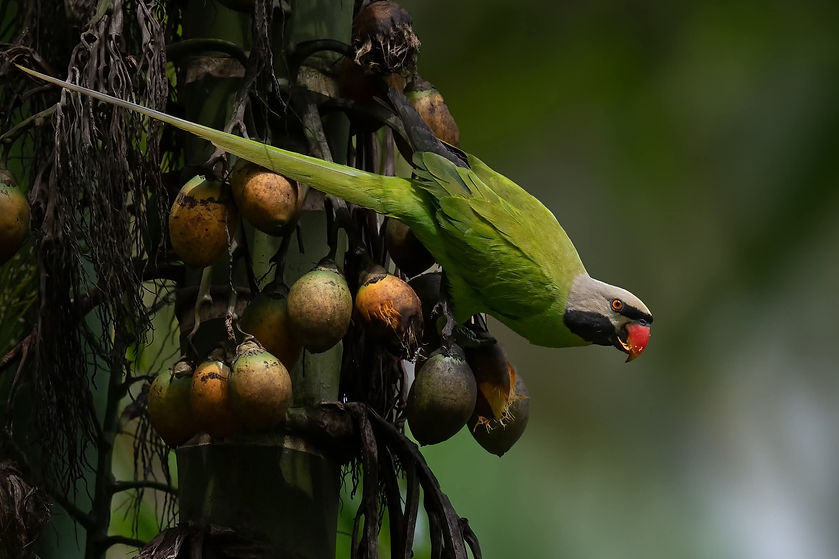
Nicobar Parakeet, Great Nicobar
Tour Overview:
This tour covers one of India’s most endemic-rich birding regions: the Andaman and Nicobar Islands in the Bay of Bengal.
Despite their spectacular biodiversity, the Andaman & Nicobar Islands remain surprisingly underexplored. Dense terrain, restricted access to some regions, and logistical challenges mean many areas are still lightly surveyed. For birders, this adds a sense of adventure and discovery and fresh records continue to emerge each year.
The Andaman & Nicobar Islands offer a completely different set of habitats — tropical evergreen forests, mangroves, and coastal wetlands — harbouring an astonishing number of island endemics. Some of the most sought-after birds on this trip include Nicobar Megapode, Nicobar Sparrowhawk, Nicobar Serpent Eagle, Nicobar Jungle Flycatcher, Andaman Wood Pigeon, Nicobar Scops Owl and many more resident endemics and migrants.
Itinerary:
Day 0-Arrival at Port Blair/ Sri Vijaya Puram Airport:
Arrive at Port Blair and stay overnight at a hotel in Port Blair
Day 1: Birding around Port Blair & Sippighat Wetlands
The Andaman Islands are a group of deep-sea islands that are characterised by their high endemism. They house over 12% of India’s endemics. The Andaman Islands also fall along the East-Australasian flyway for migratory birds, hence making it possible to spot some good migrant bird species. The islands constitute a mix of habitats: wetlands, marshes and tropical forests
After getting some good rest at our stay in Port Blair, we head to Sippighat Wetlands for this morning's birding: excellent for the endemic Andaman Teal, Cotton Pygmy Goose, Red-throated Pipit, Red-necked Stint, Broad-billed Sandpiper, and other waders.
Post-dinner night walk to attempt to spot the Andaman Masked Owl or Andaman Nightjar if conditions permit.
Day 2: Birding at the Shoal Bay & Ograbranj Wetlands
Early morning shore trip to Shoal Bay and adjacent littoral forest trails targeting Andaman Crake, Andaman Coucal, Andaman Cuckoo-dove, Andaman Treepie, Andaman Drongo, Mangrove Whistler and other mangrove specialities.
Afternoon at Ograbranj Wetlands for ducks and waders: multiple shorebird species and teal concentrations.
Today's post-dinner walk will be in the forest patch to attempt to spot the Andaman Scops Owl, Hume’s Boobook, Andaman Boobook, and other nocturnal birds.
Day 3: Birding at the Chidiyatapu Biological Park
Morning at Chidiya Tapu Biological Park — a delightful mix of mangrove-lined coastline and littoral forest. Targets: Andaman Serpent Eagle, Andaman Crake, Andaman Shama, Long-tailed Parakeet, Collared Kingfisher, Blue-tailed Bee-eater, Ruddy Kingfisher. Chidiya Tapu is also excellent for sea views and migrating waders during the winter months.
After lunch, coastal trail birding and watchpoints for terns and shorebirds.
The day ends with an optional night walk for better views or to catch any missed nocturnal species.
Day 4: Transfer to Campbell Bay in Great Nicobar
Check out from Andaman and transfer to Campbell Bay in Great Nicobar. We embark on the government inter-island vessel to Campbell Bay. This sea crossing doubles as an extended pelagic birding opportunity.
From the ship’s deck, we will look out for terns and other sea birds, with the possibility of rarities moving through open waters. Overnight on board.
Day 5: Search for the Nicobar Scops Owl
We arrive at Campbell Bay by evening. After checking in, we head to Govind Nagar sector, a reliable area for nocturnal activity along forest margins, where we will be targeting the Nicobar Scops Owl.
Day 6: Search for the Nicobar endemics
Pre-dawn birding begins at Galathea’s littoral forests and trails, one of Great Nicobar’s richest birding zones.
Search for the Nicobar Jungle Flycatcher, Nicobar Parakeet, and the ground-dwelling Nicobar Megapode.
On the return, we explore Shastri Nagar Wetlands, excellent for waders.
After resting, we resume in the evening with a targeted search at Laxmi Nagar, Old East – West Road, and Magar Nallah, prime sites for Nicobar Scops Owl (for better views).
Day 7: Search for the Nicobar endemics
We begin the morning by focusing on the Nicobar Pigeon, an iconic island endemic, of ten encountered along this stretch, along with a strong chance of observing the Great Nicobar Serpent-Eagle and the Nicobar Imperial-Pigeon.
In the latter part of the session, we move towards New Chingam Basti and Magar Nallah. These areas are especially good for mixed flocks of passerines.
Day 8: Search for the Nicobar Hooded Pitta
In the morning, we venture into the Great Nicobar Biosphere Reserve looking for specialities such as the Nicobar Hooded Pitta and Nicobar Hill Myna, along with a diversity of forest songbirds. Then in the evening, we shift to Gandhi Nagar and Shastri Nagar wetlands, ideal for observing rallids, shorebirds, and terns.
Day 9,10,11,12: Full-day birding at Great Nicobar Island for remaining targets
NOTE: The inter-island ship only operates once a week, leaving from South Andaman every Tuesday, reaching Campbell Bay on the subsequent Wednesday evening and departing from Campbell Bay on Thursday. So, we spend about 8 days in total on the island of Great Nicobar birding around the island.
Day 13: Transfer to South Andaman from Campbell Bay
Day 14: Arrival at South Andaman, with some late evening/night birding
Day 15: Last morning birding & departures from Port Blair
Early morning for last-chance birding and afternoon departures from Port Blair Airport.
END OF TOUR
Meal plan across the tour: Most breakfasts & dinners are served at homestays/lodges; lunches vary by day. All dietary preferences (vegetarian, non-vegetarian) will be accommodated when informed in advance.
Region-wise bird specialities:
South Andaman Specialities:
-
Lesser Whistling Duck
-
Cotton Pygmy Goose
-
Andaman Teal
-
Andaman Wood Pigeon
-
Andaman Green Pigeon
-
Pied Imperial Pigeon
-
Andaman Cuckoo Dove
-
Violet Cuckoo
-
Andaman Coucal
-
Andaman Nightjar
-
Plume-toed Swiftlet
-
White-Nest Swiftlet
-
Andaman Crake
-
Watercock
-
Broad Billed Sandpiper
-
Long Toed Stint
-
Red-necked Stint
-
Curlew Sandpiper
-
Pacific Golden Plover
-
Whimbrel
-
Oriental Pratincole
-
Cinnamon Bittern
-
Yellow Bittern
-
Pacific Reef Heron
-
Andaman Serpent Eagle
-
White-bellied Sea Eagle
-
Andaman Masked Owl
-
Andaman Scops Owl
-
Walden’s Scops Owl
Great Nicobar Specialities:
-
Nicobar Megapode
-
Nicobar Pigeon
-
Nicobar Imperial Pigeon
-
Great Nicobar Crake (undescribed form)
-
Red-legged Crake
-
Nicobar Serpent Eagle
-
Nicobar Sparrowhawk
-
Nicobar Scops Owl
-
Brown Boobook
-
Collared Kingfisher (endemic subspecies)
-
Stork-billed Kingfisher (endemic subspecies)
-
Nicobar Hooded Pitta
-
Nicobar Bulbul
-
Nicobar Jungle Flycatcher
-
Nicobar Hill Myna
-
Nicobar Parakeet
-
Asian Glossy Starling (endemic subspecies)
-
Hume’s Boobook
-
Andaman Boobook
-
Blue-tailed Bee-eater
-
Ruddy Kingfisher
-
Collared Kingfisher
-
Freckle-breasted Woodpecker
-
Andaman Woodpecker
-
Red-breasted Parakeet
-
Long-tailed Parakeet
-
Scarlet Minivet
-
Ashy Minivet
-
Oriental Cuckooshrike
-
Andaman Cuckooshrike
-
White-breasted Woodswallow
-
Mangrove Whistler
-
Black-naped Oriole
-
Andaman Drongo
-
Brown Shrike (Philippines)
-
Andaman Treepie
-
Oriental Reed Warbler
-
Black Browed Reed Warbler
-
Pallas Grasshopper Warbler
-
Pacific Swallow
-
Andaman Bulbul
-
Dusky Warbler
-
Common Hill Myna
-
Daurian Starling
-
Andaman Starling
-
Andaman Shama
-
Amur Stonechat
-
Andaman Flowerpecker
-
Ornate Sunbird
-
Red Throated Pipit
-
Forest Wagtail


