

Northeast India Winter Birding Tour
Sclater's Monal, White-bellied Heron, White-winged Duck & winter specialities
Northeast India Winter
Duration: 16 Days / 15 nights
Birding peaks during: November-December
Number of bird species seen during the tour: 320-370
Walking Difficulty: Little trail walking involved during the East Assam leg. The roadside does most birding with minimal walking. While only the Manas leg is safari-based.
Accommodation: Comfortable and basic homestays with twin-sharing rooms, with all basic private facilities.
Options for extension/additions:
-
Meghalaya - for Tawny-breasted Wren Babbler, Crested Finchbill
-
Mugaphi Peak - for Lisu Wren Babbler
-
Mizoram - for Mount Victoria Babax, Chin-hills Wren Babbler
Expert birdwatcher guided tour • Itinerary optimised to maximise the species count • Small group sizes, more personalized birding
Destinations/Hotspots covered:
Manas NP • Dehing Patkai • Maguri Beel • Mishmi Hills • Namdapha • Nagaland
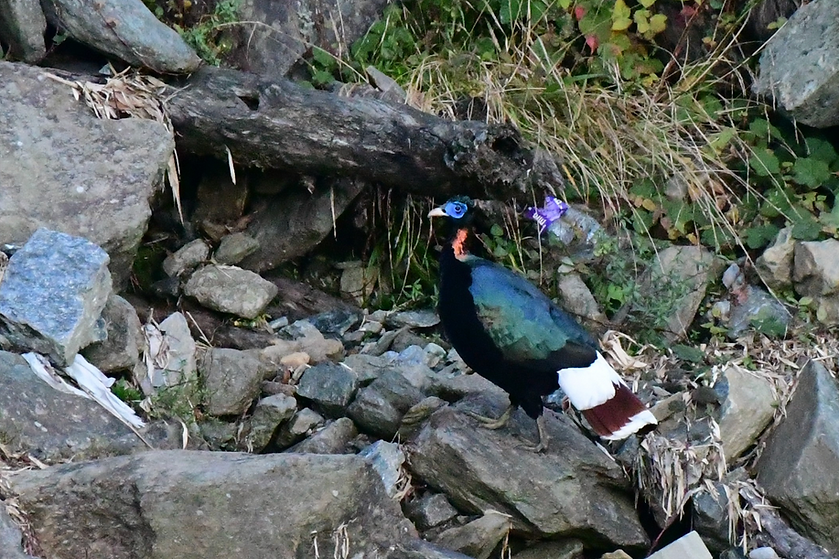
Sclater's Monal from Mishmi Hills
Tour Overview:
Northeast India is one of Asia's greatest frontiers for birdwatching, where the Eastern Himalayas, Indo-Burma, and the Indian Subcontinent converge to create one of the richest avian landscapes on Earth. This winter birding expedition traverses the biodiversity hotspots of Assam and Arunachal Pradesh, covering the lowland rainforests of Dehing Patkai and Namdapha National Park, the Himalayan foothills of Mishmi Hills, the floodplain wetlands of Maguri Beel, and the alluvial grasslands of Manas National Park. Together, these habitats support an extraordinary diversity of birds, including numerous range-restricted species, elusive forest specialists, and some of the most sought-after birds in the world
Our journey begins in the iconic grasslands of Manas National Park, where the Himalayan foothills meet the Brahmaputra floodplains. Home to specialities such as Bengal Florican, Indian Grassbird, Slender-billed Babbler, Finn's Weaver, Grey-lored Broadbill and several hornbill species, Manas offers one of India's finest introductions to Northeast birding.
We then continue to the pristine lowland hill rainforests of Dehing Patkai, searching the canopies and undergrowth for highly sought-after birds, including Grey Peacock-Pheasant, White-winged Duck, Rufous-throated Fulvetta and the range-restricted Chestnut-backed Laughingthrush
The wetlands of Maguri Beel provide excellent opportunities for rare resident passerines like Swamp Grass Babbler, Marsh Babbler, Black-breasted Parrotbill, Jerdon's Babbler, along with wintering waterbirds and migratory species like Baikal Bush Warbler, Smoky Warbler, Baikal Teal, Baer's Pochard, before we head into the cloud forests of Mishmi Hills. The region's rich elevational diversity supports an outstanding range of Himalayan specialities, including Ward's Trogon, Mishmi Wren-Babbler, Bar-winged Wren-Babbler, Manipur Fulvetta, Spot-breasted Scimitar Babbler, Long-billed Wren Babbler, Streak-throated Barwing, Brown-throated Fulvetta, Rusty-capped Fulvetta and the main target of the trip: Sclater's Monal
Our expedition concludes in the legendary rainforests of Namdapha National Park, one of Asia's richest birding destinations. Here we search for coveted species such as White-cheeked Partridge, the range-restricted Snowy-throated Babbler, Blyth's Kingfisher, White-hooded Babbler, Eyebrowed Wren-Babbler, Gray-headed Parrotbill, Brown-crowned Scimitar Babbler, and the critically endangered White-bellied Heron --most of our time here will be dedicated for the White-bellied Heron!
Winter is the ideal season to explore Northeast India, when resident Himalayan specialties are joined by thousands of migratory birds from Central Asia and Siberia. With the potential to record well over 350 species, this expedition is designed for dedicated birdwatchers and world listers seeking one of Asia's most rewarding birding experiences.
Itinerary:
Day 0-Arrival at Guwahati International Airport:
Arrival and overnight at a hotel in Guwahati.
Day 1: Introductory Birding in Guwahati Outskirts.
Today will be spent on introductory birding at Garbhanga Reserve Forest for some early and easy forest species and also visiting landfills with high chances of the majestic and endangered Greater Adjutant.
Day 2 & Day 3: Birding in Manas National Park
We pick up all the tour participants early in the morning and drive towards the safari zones of Manas National Park, one of India's finest birding destinations and a UNESCO World Heritage Site situated at the foothills of the Eastern Himalayas.
After checking into our comfortable lodge bordering the park, we head out for our first afternoon safari through the extensive alluvial grasslands and riverine forests.
Our initial targets include Bengal Florican, Finn's Weaver, Indian Grassbird, Slender-billed Babbler, Grey-lored Broadbill, along with Great Hornbills and a variety of grassland and woodland specialists.
The birding here will be done from the comfort of our safari vehicles. These safaris also yield rare mammal species like the One-horned Rhinoceros, Capped Langur, Golden Langur and Swamp Deer.
Overnight at a resort near Manas National Park.
Day 4: Transfer from Guwahati to Dibrugarh
One final morning safari allows us to revisit productive areas for any target species we may have missed.
Following a brunch, we drive back to Guwahati and board our evening flight to Dibrugarh.
Overnight stay at our homestay in Dehing Patkai NP.
Day 5 & Day 6: Birding in Dehing Patkai
Dehing Patkai is one of the most underrated forests of India. These lush forests come alive during the winters and are home to some of India's most threatened and overlooked fauna. Over the next two days, we will explore the forest both by vehicle and on foot, quietly searching the dense undergrowth, forest trails, and towering canopy for some of Northeast India's most sought-after rainforest birds.
Target species include Grey Peacock-Pheasant, White-winged Duck, Chestnut-backed Laughingthrush, Rufous-throated Fulvetta, Pied Falconet, Red-headed Trogon, Brown Hornbill, Long-tailed Broadbill and several species of rainforest birds.
Additionally, post-dinner, we will head for a short night trail to look for nocturnal birds like the Collared Scops Owl, Oriental Scops Owl and Brown Boobook.
We then drive towards Maguri Beel on the evening of Day 5, where we will spend the night.
Day 7: Birding in Maguri Wetlands & Grasslands
This morning, we travel towards Maguri Beel, one of Northeast India's most productive wetland ecosystems.
The extensive marshes, reedbeds and adjoining grasslands are home to several highly localised species, including Swamp Grass Babbler, Marsh Babbler, Black-breasted Parrotbill and Jerdon's Babbler.
The wetlands also support numerous winter visitors from Central Asia and Siberia, including Baikal Bush Warbler, Smoky Warbler, Baikal Teal and the globally threatened Baer's Pochard.
On completion of our evening birding session at Maguri Beel, we head towards Roing which is the gateway to the montane cloud forests of Mishmi Hills.
Overnight at an ecostay camp at Mishmi Hills
Days 8, 9, 10, 11: Birding in Mishmi Hills in search of endemics and migrants
Today, we enter the spectacular Mishmi Hills, one of Asia's premier destinations for Himalayan birding.
As we steadily gain elevation, the vegetation changes from subtropical broadleaf forests to cool temperate forests, with every few hundred metres bringing an entirely new bird community.
The Sclater's Monal is a very range-restricted pheasant of the Indo-China highlands, which has been reliably sighted at Mishmi Hills during a small timeframe in November in recent years.
Our birding here focuses on finding the principal target of the trip: Sclater's Monal, along with lower and mid-elevation forest species like Mishmi Wren-Babbler, Bar-winged Wren-Babbler, Spot-breasted Scimitar Babbler, Ward's Trogon, Long-billed Wren-Babbler, Brown-throated Fulvetta and Manipur Fulvetta.
Day 12: Transfer to Namdapha National Park
Following an early morning birding session in Mishmi Hills, we begin the scenic drive south towards Namdapha National Park.
After checking into our accommodation, we spent the late afternoon exploring nearby forest trails and riverine habitats as an introduction to one of Asia's richest rainforests.
Days 13, 14, 15: Birding at the Namdapha National Park
Over the next three days, our primary objective will be one of the rarest birds on the planet—the White-bellied Heron.
The population of the White-bellied heron is on a rapid decline owing to the rampant habitat destruction of riverine forests. Only 100-200 individuals are estimated to remain in the wild, few of which call the forests of Namdapha their home. We will spend long hours exploring the park's rivers and secluded valleys where this critically endangered species has occasionally been recorded.
We will be exploring areas like M'Pen Bridge, Deban Camp, Haldibari Trails, all the way to the 60-mile point of the national park.
Other important targets include White-cheeked Partridge, Snowy-throated Babbler, Blyth's Kingfisher, White-hooded Babbler, Eyebrowed Wren-Babbler, Grey-headed Parrotbill and Brown-crowned Scimitar Babbler.
Day 16: Departures from Dibrugarh Airport
We depart from Namdapha and drive towards Dibrugarh Airport for departures
END OF TOUR
Region-wise bird targets:
Manas National Park
(Riverine forest & Grassland)
-
Swamp Francolin
-
Ruddy Shelduck
-
Kalij Pheasant
-
Red Junglefowl
-
Ashy-headed Green Pigeon
-
Yellow-footed Green Pigeon
-
Pin-tailed Green Pigeon
-
Green Imperial Pigeon
-
Bengal Florican
-
Lesser Coucal
-
Green-billed Malkoha
-
Crested Treeswift
-
Brown Crake
-
Long-billed Plover
-
River Lapwing
-
Gray-headed Lapwing
-
Black Stork
-
Lesser Adjutant
-
Crested Serpent Eagle
-
Changeable Hawk Eagle
-
Crested Goshawk
-
Grey-headed Fish Eagle
-
Hen Harrier
-
Pied Harrier
-
Asian Barred Owlet
-
Spotted Owlet
-
Great Hornbill
-
Oriental Pied Hornbill
-
Blue-bearded Bee-eater
-
Stork-billed Kingfisher
-
Indochinese Roller
-
Grey-capped Pygmy Woodpecker
-
Fulvous-breasted Woodpecker
-
Greater Flameback
-
Rufous Woodpecker
-
Streak-throated Woodpecker
-
Grey-headed Woodpecker
-
Collared Falconet
-
Long-tailed Broadbill
-
Grey-lored Broadbill
-
Oriental Cuckooshrike
-
Black-winged Cuckooshrike
-
Black-hooded Oriole
-
Maroon Oriole
-
Ashy Woodswallow
-
Large Woodshrike
-
White-throated Fantail
-
Grey-backed Shrike
-
Brown Shrike
-
Rufous Treepie
-
Scarlet Minivet
-
Rosy Minivet
-
Bronzed Drongo
-
Hair-crested Drongo
-
Grey-headed Canary Flycatcher
-
Sultan Tit
-
Bengal Bushlark
-
Zitting Cisticola
-
Golden-headed Cisticola
-
Thick-billed Warbler
-
Striated Grassbird
-
White-throated Bulbul
-
Black-crested Bulbul
-
Blyth's Leaf Warbler
-
Grey-bellied Tesia
-
Yellow-eyed Babbler
-
Black-breasted Parrotbill
-
Jerdon's Babbler
-
Indian White-eye
-
Chestnut-capped Babbler
-
Indian Grassbird
-
Puff-throated Babbler
-
Abbott's Babbler
-
Slender-billed Babbler
-
Striated Babbler
-
Rufous-necked Laughingthrush
-
Velvet-fronted Nuthatch
-
Great Myna
-
White-rumped Shama
-
Pale-chinned Flycatcher
-
Siberian Rubythroat
-
Chinese Rubythroat
-
Little Pied Flycatcher
-
Siberian Stonechat
-
Gray Bushchat
-
Plain Flowerpecker
-
Ruby-cheeked Sunbird
-
Crimson Sunbird
-
Streaked Spiderhunter
-
Little Spiderhunter
-
Baya Weaver
-
Scaly-breasted Munia
-
Russer Sparrow
-
Crested Bunting
-
Little Bunting
Dehing Patkai: (lowland rainforest)
-
White-winged Duck
-
White-cheeked Partridge
-
Grey-Peacock Pheasant
-
Pale Capped Pigeon
-
Asian Emerald Dove
-
Slender Billed Vulture
-
Collared Scops Owl
-
Oriental Scops Owl
-
Brown Boobook
-
Red-headed Trogon
-
Brown Hornbill
-
Blue-eared Kingfisher
-
White-browed Piculet
-
Bay Woodpecker
-
Pied Falconet
-
White-bellied Erpornis
-
Common Green Magpie
-
Pygmy Cupwing
-
Grey-cheeked Warbler
-
White-spectacled Warbler
-
Rufous-faced Warbler
-
White-browed Scimitar Babbler
-
Grey-throated Babbler
-
Large Scimitar Babbler
-
White-hooded Babbler
-
Rufous-throated Fulvetta
-
Streaked Wren Babbler
-
Eyebrowed Wren Babbler
-
Nepal Fulvetta
-
Lesser-necklaced Laughingthrush
-
Greater-necklaced Laughingthrush
-
Chestnut-backed Laughingthrush
-
Rusty-bellied Shortwing
-
Lesser Shortwing
-
White-crowned Forktail
-
Pygmy Flycatcher
-
Snowy-browed Flycatcher
-
Black-backed Forktail
-
Blue-winged Leafbird
Maguri Wetlands (floodplain wetland)
-
Fulvous Whistling Duck
-
Bar-headed Goose
-
Graylag Goose
-
Cotton Pygmy Goose
-
Eastern Spot-billed Duck
-
Red-crested Pochard
-
Ferruginous Duck
-
Northern Lapwing
-
Pheasant-tailed Jacana
-
Bronze-winged Jacana
-
Pin-tailed Snipe
-
Common Snipe
-
Small Pratincole
-
Australasian Grass Owl
-
Pied Kingfisher
-
Delicate Prinia
-
Yellow-bellied Prinia
-
Palla's Grasshopper Warbler
-
Baikal Bush Warbler
-
West-Himalayan Bush Warbler
-
Spotted Bush Warbler
-
Bank Swallow
-
Grey-throated Martin
-
Dusky Warbler
-
Smoky Warbler
-
Chestnut-crowned Bush Warbler
-
Marsh Babbler
-
Swamp Grass Babbler
-
Abbott's Babbler
-
White-cheeked Starling
-
Black-faced Bunting
Namdapha NP: (mid elevation)
-
Mountain Imperial Pigeon
-
White-bellied Heron
-
Rufous-necked Hornbill
-
Blyth's Kingfisher
-
Great Barbet
-
Golden-throated Barbet
-
Pale-headed Woodpecker
-
Oriental Hobby
-
Collared Treepie
-
Hill Prinia
-
Gray-headed Parrotbill
-
Rufous-headed Parrotbill
-
Pale-billed Parrotbill
-
Snowy-throated Babbler
-
Sapphire Flycatcher
Mishmi Hills: (high elevation)
-
Hill Partridge
-
Chestnut-breasted Partridge
-
Sclater's Monal
-
Barred Cuckoo-Dove
-
Hodgson's Frogmouth
-
Himalayan Swiftlet
-
Mountain Hawk-Eagle
-
Himalayan Buzzard
-
Mountain Scops Owl
-
Collared Owlet
-
Himalayan Owl
-
Ward's Trogon
-
Wreathed Hornbill
-
Yellow-rumped Honeyguide
-
Darjeeling Woodpecker
-
Crimson-naped Woodpecker
-
Grey-chinned Minivet
-
Black-headed Shrike Babbler
-
White-browed Shrike-Babbler
-
Green Shrike-Babbler
-
Black-eared Shrike-Babbler
-
Yellow-billed Blue Magpie
-
Yellow-bellied Fairy Fantail
-
Yellow-cheeked Tit
-
Black-throated Prinia
-
Scaly-breasted Cupwing
-
Striated Bulbul
-
Mountain Bulbul
-
Ashy-throated Warbler
-
Buff-barred Warbler
-
Lemon-rumped Warbler
-
Chestnut-crowned Warbler
-
Grey-hooded Warbler
-
Grey-sided Bush Warbler
-
Mountain Tailorbird
-
Broad-billed Warbler
-
Black-throated Tit
-
Fire-tailed Myzornis
-
Golden-breasted Fulvetta
-
Brown-throated Fulvetta
-
Manipur Fulvetta
-
Black-breasted Parrotbill
-
White-breasted Parrotbill
-
Black-throated Parrotbill
-
Striated Yuhina
-
Black-chinned Yuhina
-
Whiskered Yuhina
-
White-naped Yuhina
-
Stripe-throated Yuhina
-
Rufous-vented Yuhina
-
Golden Babbler
-
Rufous-capped Babbler
-
Mishmi Wren Babbler
-
Bar-winged Wren Babbler
-
Black-crowned Scimitar Babbler
-
Red-billed Scimitar Babbler
-
Slender-billed Scimitar Babbler
-
Streak-breasted Scimitar Babbler
-
Spot-breasted Scimitar Babbler
-
Cachar Wedge-billed Babbler
-
Yellow-throated Fulvetta
-
Spot-throated Babbler
-
Long-billed Wren Babbler
-
Striated Laughingthrush
-
Himalayan Cutia
-
Scaly Laughingthrush
-
Blue-winged Laughingthrush
-
Black-faced Laughingthrush
-
Chestnut-crowned Laughingthrush
-
Long-tailed Sibia
-
Beautiful Sibia
-
Streak-throated Barwing
-
Blue-winged Minla
-
Chestnut-tailed Minla
-
Rusty-fronted Barwing
-
Rufous-backed Sibia
-
Red-faced Liocichla
-
Grey-sided Laughingthrush
-
Beautiful Nuthatch
-
White-tailed Nuthatch
-
Spotted Elachura
-
Alpine Thrush
-
Long-billed Thrush
-
Chestnut-thrush
-
Black-throated Thrush
-
Red-throated Thrush
-
Large Niltava
-
Small Niltava
-
Rufous-bellied Niltava
-
Chinese Vivid Niltava
-
White-gorgeted Flycatcher
-
Himalayan Shortwing
-
Gould's Shortwing
-
Spotted Forktail
-
White-tailed Robin
-
Himalayan Bluetail
-
White-browed Bush Robin
-
Golden Bush Robin
-
Slaty-blue Flycatcher
-
Rufous-gorgeted Flycatcher
-
Blue-fronted Redstart
-
Daurian Redstart
-
Chestnut-bellied Rock Thrush
-
Fire-breasted Flowerpecker
-
Black-throated Sunbird
-
Green-tailed Sunbird
-
Rufous-brested Accentor
-
Olive-backed Pipit
-
Dark-rumped Rosefinch
-
Crimson-browed Finch
-
Scarlet Finch
-
Gray-headed Bullfinch
-
Gold-naped Finch
-
Dark-breasted Rosefinch
-
Little Bunting


